


What IETM Stands For – and What It Is Not
IETM stands for Interactive Electronic Technical Manual. The term originated in US defense procurement in the 1990s, when the Department of Defense began requiring that maintenance and operations documentation for military equipment be delivered in structured, navigable digital formats rather than cumbersome printed volumes that field technicians could not practically use.
Today, the term has migrated well beyond defense. It is used across aerospace, semiconductor manufacturing, industrial machinery, and medical devices – anywhere complex equipment ships globally and needs to be maintained by people who cannot call the original engineer every time something goes wrong.
What an IETM is not:
– A PDF. A PDF is static. It cannot adapt to the reader’s task, cannot be searched by error code, and cannot link a maintenance step directly to the relevant parts list.
– A Word document saved as HTML. Converting a document to a webpage does not make it interactive or structured.
– A help file. Help files are designed for software interfaces. An IETM is designed for physical systems – machines, equipment, weapons platforms, medical devices.
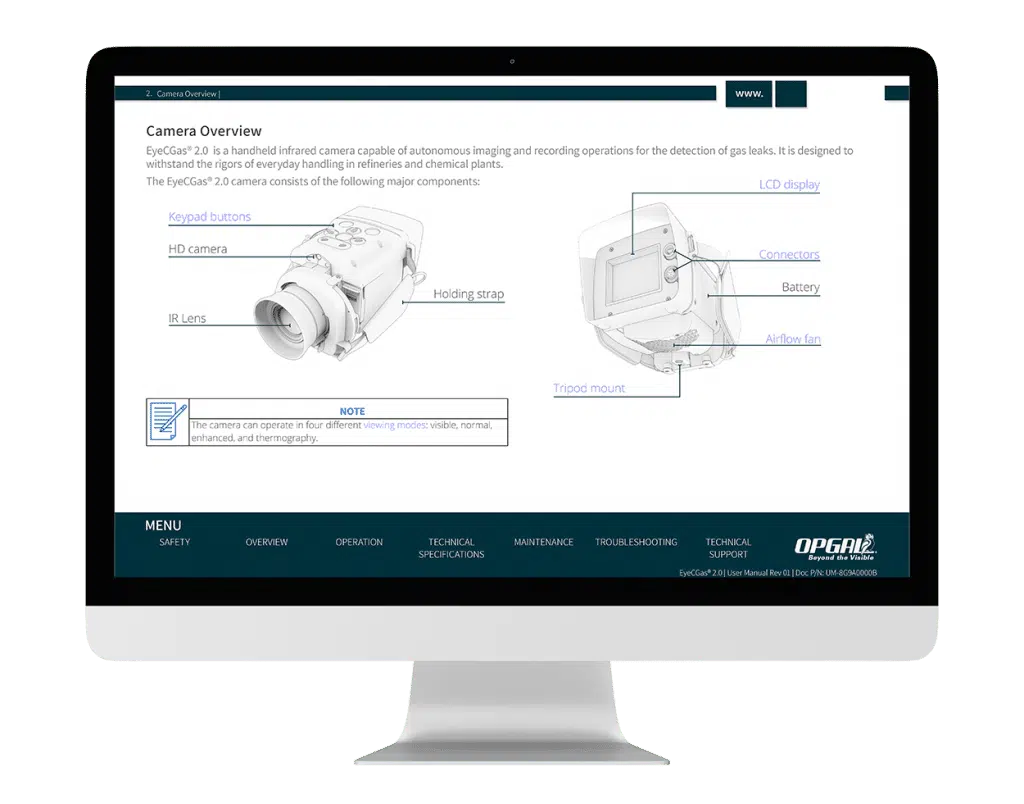
An IETM is a structured digital document built around how a technician or operator actually uses it – searchable by error code, navigable by task, linked between procedures and parts lists, and device-ready for use on a tablet or industrial screen in the field or on the factory floor.
The Five Classes of IETM – and Why the Distinction Matters
The original military standard (MIL-PRF-87268) defined five classes of IETM, ranging from Class I (essentially a digitized page-based document) through Class V (a fully integrated, system-connected technical information system). Most commercial and defense export applications today require Class III or Class IV:
Scroll-type: Class III
Content is structured and searchable but presented sequentially – a significant improvement over PDF for usability.
Linear interactive: Class IV
Content branches based on the technician’s task and system condition. The reader navigates directly to what they need. This is the format most OEM buyers and defense procurement programs specify when they say ‘IETM’.
The S1000D standard – the international specification used in European and NATO defense procurement – defines its own structured content model that maps broadly onto Class IV. If you are supplying equipment to a European defense customer or an export program with NATO involvement, S1000D compliance is likely a contract requirement, not a suggestion.
Why OEM Buyers Are Specifying IETMs in Commercial Contracts
The shift is being driven by three converging forces:
First, procurement standards are tightening around structured technical documentation. NATO standardization bodies and the U.S. Department of Defense now specify S1000D compliance and IETM-format delivery as standard contract requirements for platform sustainment and lifecycle support. For defense and aerospace contractors, this is no longer optional – it is a procurement gate. Contractors without the capability to deliver compliant, structured documentation are excluded from major opportunities.
Second, support costs are a measurable line item. Companies deploying structured digital work instructions in IETM format see concrete improvements in operations: unplanned downtime reduces by 20-40%, support costs drop 15-30%, technician training time cuts by 25-50%, and first-pass fix rates improve by 10-20%. These are improvements that OEM buyers have noticed and wish to obtain. They are writing digital documentation specifications into procurement contracts because insufficient, substandard documentation has a direct and quantifiable cost to their operations.
Third, the workforce is changing. The experienced technicians who could work around a bad manual are retiring. Their replacements – often working with equipment in a second language, and in a country they have never visited – need documentation that clearly and efficiently guides them through a task. An IETM does that. A PDF does not.
In sum, your technicians in the field don’t need another PDF they can’t search, and your buyers don’t want to pay for support calls that could have been prevented with better documentation. An IETM fixes both problems – and your competitors are already building them.
Galil Technical Writing converts technical knowledge into interactive manuals that actually work. Let’s build one for your product. Contact: Tamir@galiltc.co.il
Published by Galil Technical Writing | Misgav, Galilee | galiltc.co.il
